
A wonderful Poetry Friday to you and yours!
Want to know more about Poetry Friday? Check out: What in the World is Poetry Friday, and please visit Mary Lee Hahn for this week’s roundup. Mary Lee is serving up a delectable feast of poetry and her recipe for three-bean salad. Yum!
I am over the treetops with excitement to speak with Jone Rush MacCulloch about her extraordinary new novel in verse. Tilt is a middle-grade, coming-of-age story about a young girl named Darrah who struggles with her parents’ divorce while navigating sometimes-tumultuous, fifth-grade friendships.
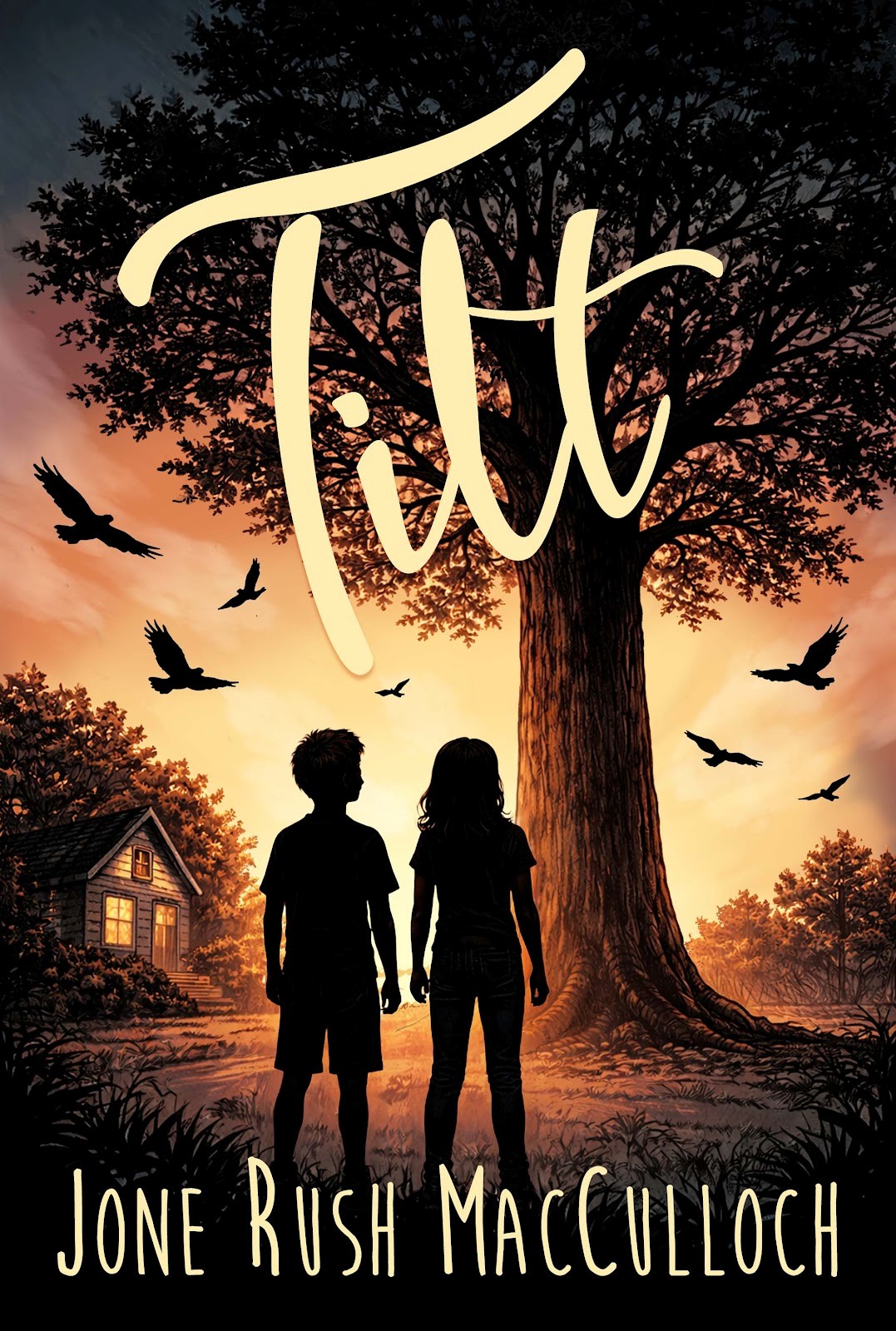
Real events inspired Jone to write this compelling story. For more on the backstory, check out Carol Labuzetta’s thoughtful review of Tilt here and Jone’s book launch here.
Let’s explore Jone’s process and journey to create Tilt.
TKJ: Jone, thank you for sharing Tilt with me. I was honored to be a beta reader, and I’m in awe of this beautiful work. It offers so much depth, so succinctly. Subplots, meaningful motifs, and gorgeous writing layer this story. Your first chapter starts:
Garry the Oak: Spring
dense
leaves
twist, twirl
in the breeze–
whisper a story–
below, a girl waits for her friend.
There is much to admire about your poetic technique, and the last line welcomes us in, invites us to know more, and feels like the opening of a play or movie. Please tell us about your creative process.
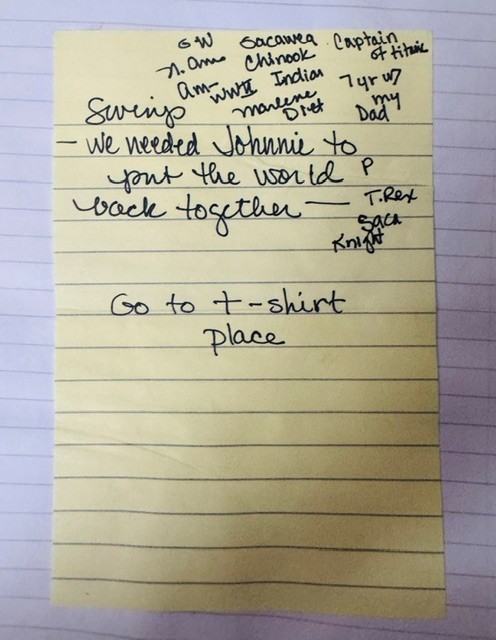
JRM: I’m mostly a pantster when it comes to writing. Usually, something will come to me when I’m driving or in a dream. The first line of Tilt, was very different. I was on my way home from school thinking about something the students told me, “We needed Johnnie [the boy who’s the inspiration for the book] to put the world back together.”
Then this line came to me, “Whoosh up, down splat. Whoosh up, down splat. That’s the way it is on the trampoline.”
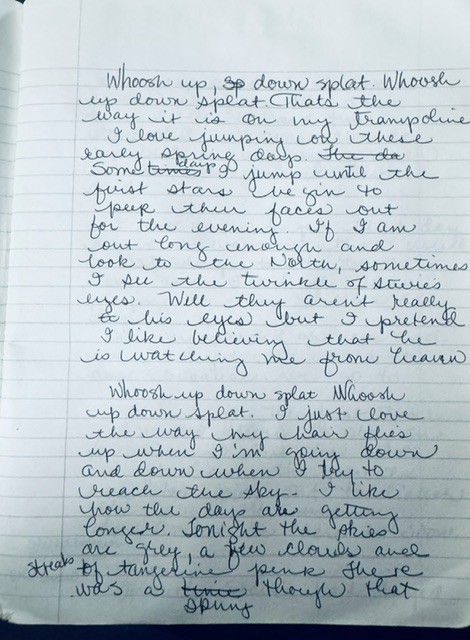
My first draft was very short. The story grew through conversations with students in library classes about the friend they lost. Looking back on my first-draft notebook, I see that I did a lot of notes, research, and thinking about the characters.
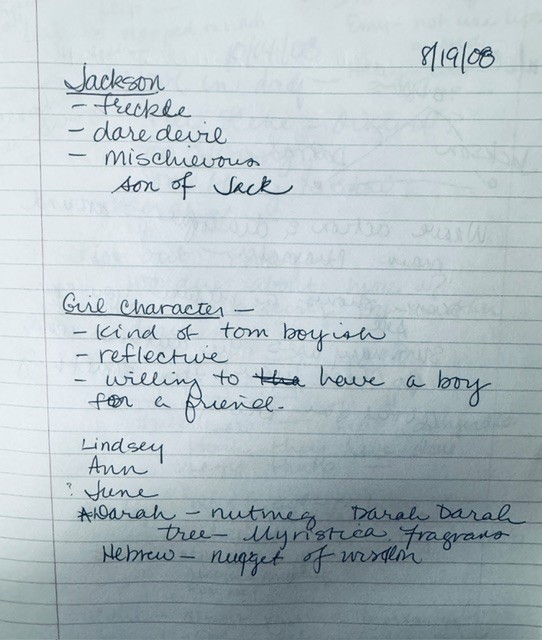
Later, when I moved to poems, I used the titles as an outline to see where I was in the story.
TKJ: I was struck by how artfully your novel builds. From the beginning, you gently foreshadow and skillfully feed into the climax. Please tell us about your revision process for Tilt.
JRM: Thank you for that. I think I love the process of revision the best. This story has morphed so much from the beginning. One thing I knew early on, is that my story needed tension. I knew that Jackson would die. I knew that Darrah would be deeply affected by his death. The question I asked myself was, “What else?” Without more, it would be the world’s shortest story. As I said, I am mostly a pantster, but in going through my notes, I did find a storyboard.
Being a teacher librarian gave me a catbird seat into the lives of students. I saw students dealing with a wide variety of issues and challenges. I wondered about child grief. I asked questions of my character, Darrah, getting to know her.
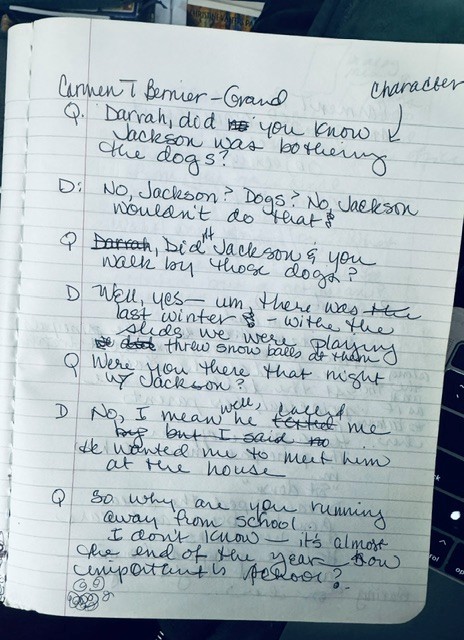
Being a voracious reader, I had a sense of what makes for a good story. I also asked the kids questions and read them parts of the early draft. You might say my first beta readers were students. Recently, one of them shared her memory of reading an early edition.
TKJ: I imagine that collaboration was meaningful and therapeutic for everyone. Given your background as a librarian and a teacher, I enjoyed that you included both a librarian and a teacher as characters in Tilt. You also wove Shakespearean references and the grandmother’s wisdom into the story. Please tell us why this was important.
JRM: My grandmother loved Shakespeare. Her favorite quote was, "To thine own self be true." I haven’t been much of a student of Shakespeare, but I’ve always been curious about the symbolism of plants and animals. I research words when I write; therefore, it wasn’t a big leap to have Shakespeare appear in the story.
In 2024, I created a mixed media piece, “Seven Crows Keep a Secret.” As a fan of fairy tales and folklore, numbers are also important to me. I queried what seven crows meant and found the Shakespeare verse that is in the front of the book. Of course, that led me to layer it into the story. It was the same with the herbs in the garden.
TKJ: Many students face reading and literacy challenges today. Writing in verse makes Tilt highly accessible. Did you choose to write in verse at the inception of this journey, or did Tilt evolve into a novel in verse?
JRM: No, I started in prose, but I loved reading novels in verse. As I added them to my collection: Diamond Willow by Helen Frost, Minn and Jake by Janet Wong, and Out of the Dust by Karen Hesse, these books made me ask, “what if?” My writing has always been sparse. I love the poetic form so much more.
In 2009, I revised the story as a series of poems. Somewhere in my writing, I ran across a Fibonacci poem, “Golden Solitaire” to go with a photo I took in the early 2000’s. I realized that I could use a series of Fibonacci poems by an oak to create a mood in between sections of time.
TKJ: I love how the oak anchors us and gives structure to the story. I understand that you created River Oak Press for the purpose of indie publishing. Please tell us about the inception of River Oak Press and your publishing journey.
JRM: I first thought I would go the route of traditional publishing. Over the years, independent, boutique, self-publishing has become more accessible and acceptable. Janet Wong and Sylvia Vardell spoke about it in their classes. Darcy Pattison has made a career of self-publishing. Michelle Barnes, Tabatha Yeats, and Carol Labuzzetta all have small presses. It became clear to me that Tilt was a love project, and it would be a challenge to publish traditionally.
In talking with my sister-in-law, a freelance editor, about the pros and cons of publishing on my own, and then speaking with Erin Dionne, I decided it would be best to create a small press, River Oak Press. I hope there will be some collections from River Oak Press in the future.
TKJ: How exciting! We’ll stay tuned. Were there any big surprises along your journey to create Tilt?
JRM: Yes, I spent from 2016 to 2024 writing in the voice of Lily and the voice of Darrah. In January 2024, a new member of my weekly critique group asked, “Why are you telling this story in two voices?” It gave me pause. I compared the number of Lily poems to Darrah poems and it became very clear that this was and always had been Darrah’s story. I had written Lily to fully understand Darrah’s emotional arc. When I pulled the Lily poems, my story became stronger and more cohesive. Many of the Lilly poems were able to be revised in Darrah’s voice.
An interesting aside, when I was going through final edits, I discovered a critical poem was missing. It was still in the Lily poems and had never made it over. I’m glad I caught it in time.
TKJ: Well, the final product is truly a work of art. Jone, thank you for sharing your insights with us and this impactful story with the world! Please tell us how we can learn more about you and where we can purchase a copy of Tilt.
JRM: Thank you for this conversation. Readers can find me at https://www.jonerushmacculloch.com/ and on Instagram: @jonerushmacculloch.
Tilt is available on Amazon. My hope is to have it listed on Bookstore.org soon.